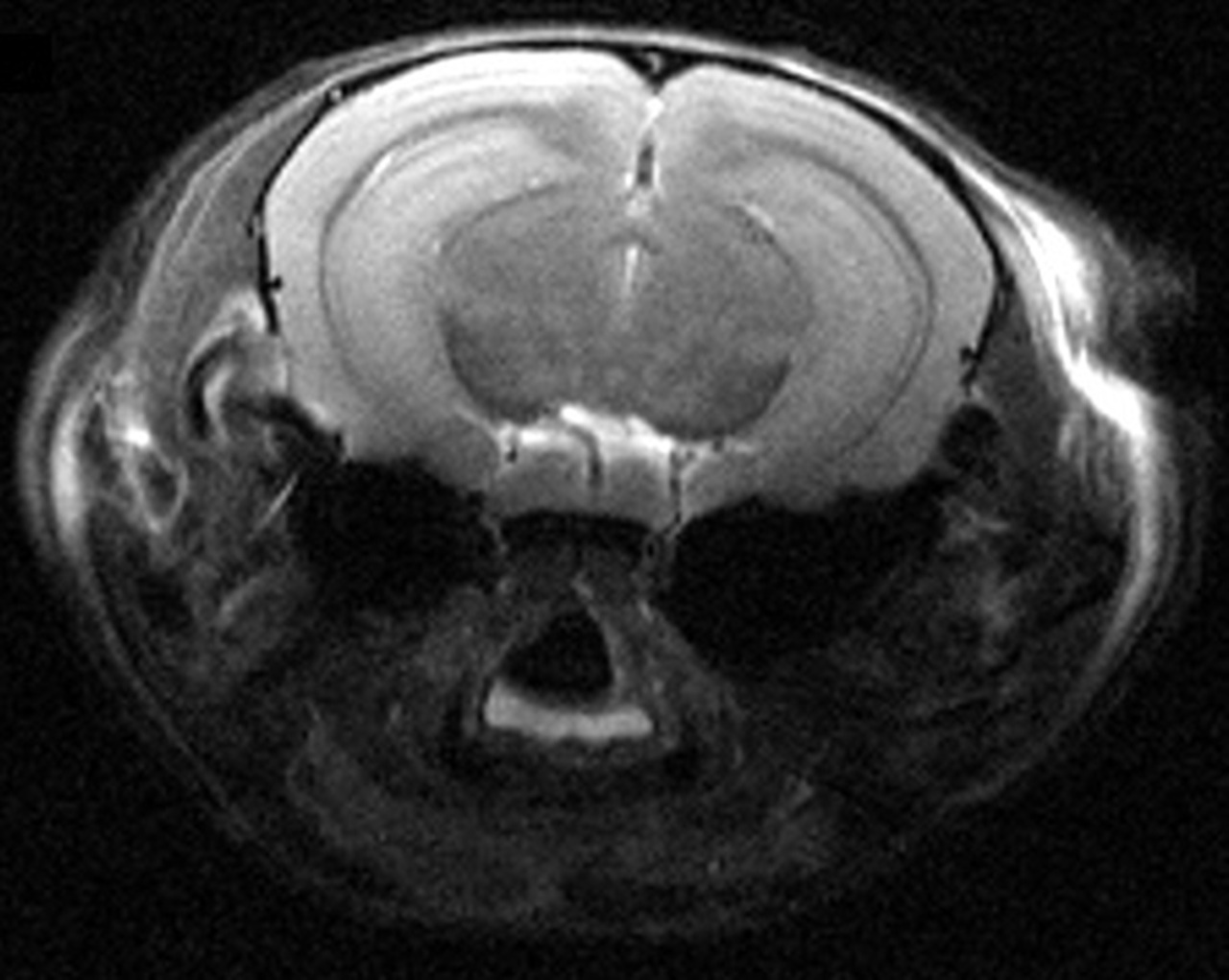


Preclinical MRI/PET imaging
Hybrid nuclear magnetic resonance imaging and positron emission tomography (PET/MRI) scanners are the latest development in medical imaging, both at the clinical and preclinical level.
Until a few years ago, both techniques worked separately or, in the case of PET, together with computed tomography (CT).
The new MRI/PET scanners provide a morphological image characterised by high spatial resolution and high contrast resolution (MRI) and a functional image with high sensitivity (PET).
MRI uses magnetic fields and radiofrequency waves to obtain the aforementioned morphological and functional information of the sample. Due to its high contrast resolution in soft tissues, it is considered the technique of choice for the study of central nervous system and musculoskeletal lesions.
PET, on the other hand, is characterised by its high sensitivity (in the order of nanomolar) and for being minimally invasive. With the use of different radiotracers, a multitude of pathologies that affect the functionality of the organism can be addressed, such as pathologies of the nervous system, the heart or cancer.
Until a few years ago, both techniques worked separately or, in the case of PET, together with computed tomography (CT).
The new MRI/PET scanners provide a morphological image characterised by high spatial resolution and high contrast resolution (MRI) and a functional image with high sensitivity (PET).
MRI uses magnetic fields and radiofrequency waves to obtain the aforementioned morphological and functional information of the sample. Due to its high contrast resolution in soft tissues, it is considered the technique of choice for the study of central nervous system and musculoskeletal lesions.
PET, on the other hand, is characterised by its high sensitivity (in the order of nanomolar) and for being minimally invasive. With the use of different radiotracers, a multitude of pathologies that affect the functionality of the organism can be addressed, such as pathologies of the nervous system, the heart or cancer.
Instrumentation
|
ICTS Complutense Bioimaging
|